By Dr. Mahsa Hakim & Dr. Nazanin Hakim, Union Square Dental Practice | San Francisco
Key Takeaways
- All-on-4 dental implants use strategically positioned implants to support a fixed full-arch prosthesis for extensive or complete tooth loss.
- Immediate provisional teeth after All-on-4 surgery require adequate implant stability, controlled bite forces, and careful protection during osseointegration.
- Long-term All-on-4 success depends on precise implant positioning, healthy supporting tissues, proper prosthetic design, effective hygiene, and ongoing professional maintenance.
All-on-4 dental implants can provide a fixed, highly functional solution for patients who have lost most or all of their teeth or whose remaining teeth have a poor long-term prognosis. At Union Square Dental Practice, we approach this treatment as a comprehensive full-arch rehabilitation rather than simply a procedure involving four implants. Successful outcomes depend on careful evaluation of bone anatomy, implant positioning, occlusion, soft tissue, restorative space, and prosthetic design.
As dentists treating complex restorative cases in San Francisco, we believe patients should understand both the advantages and limitations of All-on-4 therapy before proceeding. The treatment can often reduce the need for extensive bone grafting and may allow immediate provisional teeth, but every case requires individualized planning based on biological and mechanical factors.
What All-on-4 Dental Implants Actually Are
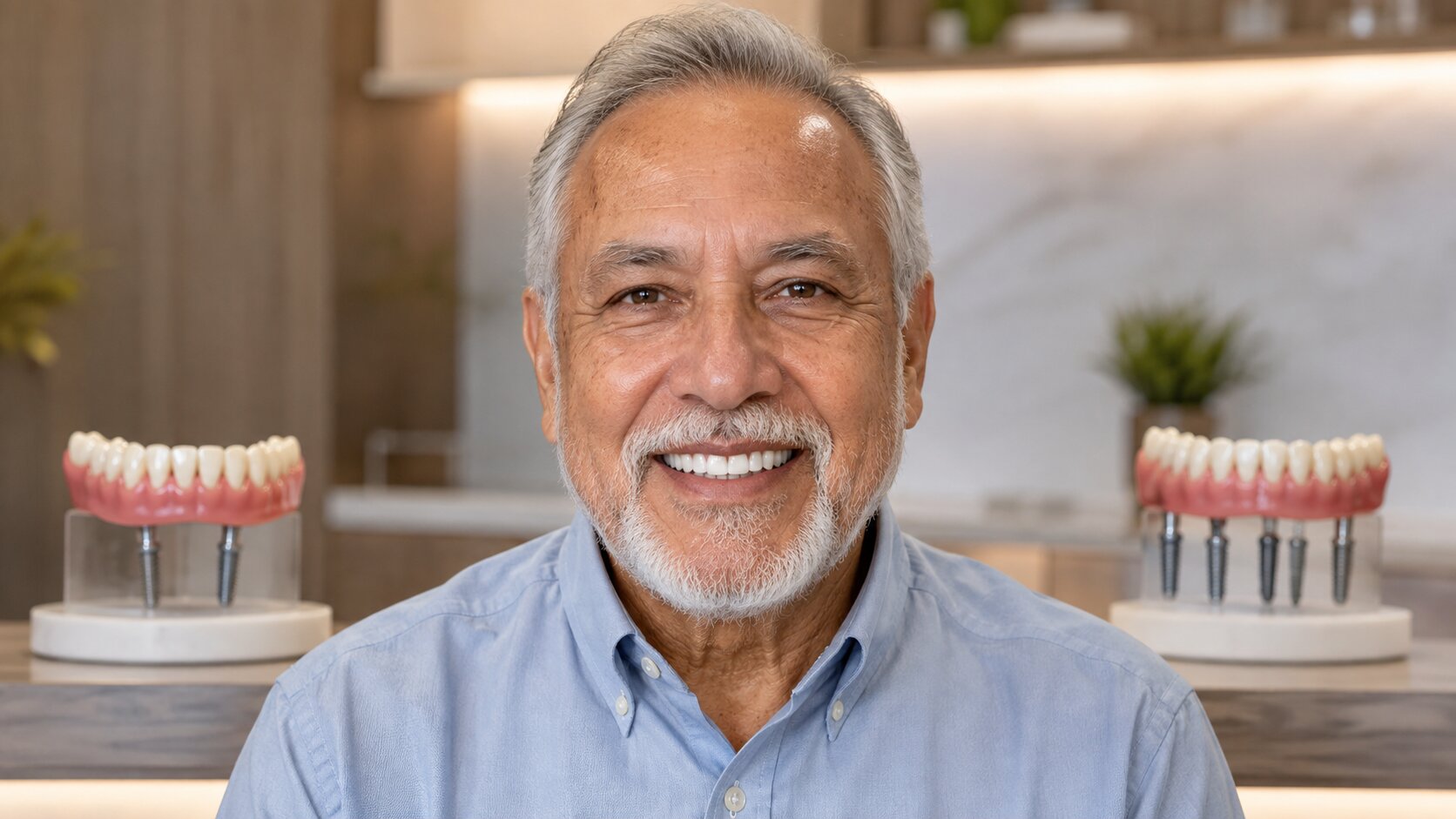
All-on-4 dental implants are designed to support an entire fixed dental arch using four strategically positioned implants. In a typical configuration, two implants are placed more vertically in the anterior region while the posterior implants are angled to take advantage of available bone and increase the effective spread of implant support. The tilted posterior implants can help avoid anatomical structures such as the maxillary sinuses or portions of the mandibular nerve while reducing the need for extensive posterior bone grafting. Once the implants are positioned, they are connected by a rigid full-arch prosthesis that distributes chewing forces across the implant system. In many appropriately selected cases, a fixed provisional restoration can be attached shortly after implant placement. The final prosthesis is generally fabricated after healing and osseointegration have progressed.
Although the name implies that four implants are always used, we do not consider four implants an absolute requirement for every full-arch case. Implant number should be determined by bone quality, implant distribution, arch anatomy, functional loading, parafunctional habits, restorative design, and long-term risk. Some patients may benefit from five or six implants to improve load distribution or provide additional support. Others may have anatomy that makes four appropriately positioned implants highly predictable. The objective is not to place the fewest implants possible but to create a biomechanically stable foundation for the final prosthesis. For that reason, we prefer to think of All-on-4 as a treatment concept rather than a rigid formula.
Who May Be a Good Candidate for All-on-4 Treatment
Patients who are completely edentulous are often strong candidates for full-arch implant rehabilitation, particularly when they are dissatisfied with the movement, limited chewing efficiency, or bulk of removable dentures. We also evaluate patients who still have natural teeth but whose dentition has been severely compromised by periodontal disease, recurrent decay, fractures, chronic infection, or extensive failed restorative treatment. In some cases, preserving isolated teeth would require multiple complex procedures with uncertain long-term prognosis. A full-arch implant approach may then provide a more unified restorative strategy. However, the presence of damaged teeth alone does not establish candidacy for treatment. Bone anatomy, systemic health, oral hygiene, functional forces, and patient expectations all need to be evaluated.
Medical factors can significantly influence implant treatment even when the oral anatomy is favorable. Patients with poorly controlled diabetes, heavy tobacco use, immune compromise, certain bone-related conditions, or medications that affect healing may have an increased risk of complications. Bruxism and severe clenching also require careful consideration because these habits can place substantial forces on a full-arch restoration. Advanced age by itself is not necessarily a contraindication if the patient is otherwise medically suitable and capable of maintaining the prosthesis. We also evaluate whether a patient can perform the daily hygiene required beneath a fixed bridge. Appropriate candidacy therefore depends on the interaction between anatomical, medical, functional, and behavioral factors rather than on a single measurement.
Evaluating Whether Existing Teeth Should Be Saved
One of the most significant decisions in full-arch implant treatment is determining whether compromised natural teeth should be preserved or removed. We evaluate periodontal attachment, mobility, root fractures, recurrent decay, endodontic status, crown-to-root relationships, furcation involvement, and the structural integrity of existing restorations. A tooth may be technically treatable but still have a poor long-term prognosis when several unfavorable factors are present simultaneously. Conversely, teeth that initially appear compromised may sometimes remain serviceable for many years after appropriate periodontal or restorative care. Extraction should therefore never be recommended solely because implant treatment is available. The decision requires careful comparison between the predictability of preserving the natural dentition and the predictability of full-arch reconstruction.
We also evaluate the prognosis of the entire arch rather than considering each tooth independently. A patient may have several individual teeth that can be maintained, yet doing so could require extensive root canal treatment, periodontal surgery, crowns, grafting, and additional implants for missing teeth. The result may be a complex restoration supported by teeth with widely different prognoses. In some circumstances, transitioning to a full-arch implant-supported prosthesis may provide a more stable and maintainable foundation. In other cases, preserving strategic natural teeth remains preferable. We discuss these alternatives carefully because extraction is irreversible and should only be undertaken when the anticipated benefits of full-arch treatment justify removing the remaining dentition.
Why CBCT Imaging Is Important Before All-on-4 Surgery
Cone beam computed tomography, or CBCT, is particularly valuable in full-arch implant treatment because it allows us to evaluate the jaw in three dimensions. Traditional two-dimensional dental radiographs can provide useful information, but they cannot accurately demonstrate bone width, ridge angulation, or the precise spatial relationship between potential implant sites and important anatomical structures. CBCT imaging allows us to examine available bone volume, cortical thickness, sinus anatomy, nasal floor position, nerve location, residual extraction defects, and areas of pathology. In the lower jaw, identifying the inferior alveolar nerve is especially important when planning posterior implant placement. In the upper jaw, the relationship between available bone and the maxillary sinuses can significantly influence implant angulation. This anatomical information is fundamental to safe and predictable treatment.
The greatest value of three-dimensional imaging occurs when implant planning is coordinated with the intended final tooth position. Implant placement should ideally be prosthetically driven rather than based exclusively on where bone happens to be available. An implant can be perfectly integrated into bone yet still create restorative problems if it is placed too far facially, lingually, vertically, or posteriorly. Digital treatment planning can help us evaluate both the anatomy and the future prosthesis within the same three-dimensional environment. This makes it possible to anticipate screw-access locations, prosthetic thickness, cantilever length, esthetic concerns, and hygiene access before surgery begins. Guided surgery may also be considered in appropriate cases to help transfer the digital plan into the clinical procedure.
Bone Quality and the Use of Tilted Implants
The amount of bone present is only one part of implant treatment planning because bone quality also affects implant stability. Some areas of the jaw contain dense cortical bone, while others may be composed primarily of softer cancellous bone. The ability of an implant to achieve mechanical stability at the time of placement can therefore vary considerably even when sufficient bone volume appears to be present. Implant length, diameter, design, drilling protocol, cortical engagement, and insertion technique all influence primary stability. These factors become especially important when immediate loading is being considered. A patient may have adequate bone for implant placement but still require a delayed loading protocol if primary stability is insufficient.
Tilting posterior implants is one of the characteristic features associated with the All-on-4 concept. This technique can allow us to use available bone more efficiently and may help avoid structures such as the maxillary sinus or mandibular nerve. Angled posterior implants can also increase the anterior-posterior spread of the implant support, which may reduce the length of the distal prosthetic cantilever. Reducing cantilever length is biomechanically valuable because excessive cantilevers can magnify forces on terminal implants and prosthetic components. Tilted implants do not eliminate the need for grafting in every case, but they can make graft-free treatment possible for some patients. Their success depends on precise positioning and careful restorative planning rather than angulation alone.
Understanding Immediate Loading and Teeth in a Day
Immediate loading refers to attaching a provisional restoration to the implants shortly after surgical placement rather than leaving the implants unloaded for several months. This approach can significantly improve the patient experience because it allows many individuals to transition from failing teeth or dentures to a fixed provisional bridge within a short period. However, receiving fixed teeth immediately does not mean the implants have already biologically integrated with the bone. At the time of surgery, implant stability is predominantly mechanical. Over the following weeks and months, bone remodels around the implant surface and develops biological integration. The provisional restoration must therefore be designed to protect this healing environment.
Primary implant stability is one of the most important considerations when deciding whether immediate loading is appropriate. The implants must also be distributed favorably, rigidly connected through the prosthesis, and protected from excessive functional forces. We carefully adjust the bite to reduce potentially harmful contacts during early healing. Patients are usually instructed to follow a modified or soft diet because chewing hard foods can generate forces that exceed what the healing implants should tolerate. Immediate loading should therefore be considered a controlled biomechanical protocol rather than simply a convenience. When conditions are unfavorable, delaying loading may provide a safer and more predictable outcome.
What Happens During All-on-4 Implant Surgery
The surgical process varies depending on whether the patient still has teeth, the extent of bone loss, and whether additional procedures are required. If hopeless teeth are present, they are generally removed as part of the surgical procedure. The remaining bone may then be reshaped to create a stable ridge and adequate restorative space for the future prosthesis. Implant osteotomies are prepared according to the preoperative plan, with particular attention to depth, spacing, angulation, and anatomical boundaries. Four or more implants are then placed depending on the final treatment design. Multi-unit abutments may be used to correct implant angulation and create an appropriate restorative platform for the full-arch bridge.
Soft-tissue management is another critical component of surgery. The gum tissue must heal around the implant components in a way that allows long-term hygiene access while maintaining appropriate prosthetic contours. Small grafting procedures may occasionally be performed around extraction sockets or implant sites if needed, even when extensive bone grafting is avoided. If the implants achieve sufficient stability, the provisional restoration can be attached following surgery. If immediate loading is not considered safe, an alternative temporary restoration may be used while healing progresses. Surgical decisions are therefore based on conditions encountered clinically rather than on a predetermined requirement to deliver a fixed bridge immediately.
Why Implant Position Is More Important Than Implant Count
Implant number alone does not determine the strength or predictability of a full-arch restoration. The distribution of the implants across the jaw can have a greater influence on biomechanics than simply adding additional implants within the same limited area. A wide anterior-posterior spread can help distribute forces more efficiently and reduce the amount of unsupported prosthesis extending beyond the terminal implants. This unsupported extension is known as a cantilever, and excessive cantilever length can increase leverage on the implant system. Implant angulation and spacing must therefore be planned in relation to the final prosthesis. Four well-distributed implants may sometimes provide a more favorable foundation than a larger number of poorly positioned implants.
Implant placement also determines where restorative screw-access channels emerge through the prosthesis. Ideally, these access channels should exit through areas that preserve esthetics while maintaining sufficient restorative material around them. Implants placed too far toward the facial side may create problems with tooth position, esthetics, or hygiene. Implants positioned too far lingually or palatally can create a bulky prosthesis and reduce tongue space. Vertical depth is equally important because the prosthesis needs sufficient room for abutments, structural framework, restorative teeth, and artificial gingival material. Proper implant positioning therefore requires the surgeon to think like a restorative dentist before the implant is ever placed.
Restorative Space and Bone Reduction
A full-arch implant prosthesis requires more vertical space than a conventional crown because it must incorporate multiple restorative components. Depending on the design, space may be required for abutments, a titanium or zirconia framework, replacement teeth, and artificial gingival material. Patients who have experienced substantial bone resorption may naturally have adequate restorative space. In patients who still have significant bone volume, however, controlled bone reduction may be necessary during surgery. Without adequate space, the prosthesis can become structurally weak, excessively bulky, or esthetically compromised. For this reason, restorative space must be assessed before the surgical procedure.
Bone reduction must be carefully planned because excessive removal is irreversible. We consider lip dynamics, smile line, facial proportions, tooth display, and the intended location of the junction between the natural soft tissue and artificial gingiva. If this transition line becomes visible when a patient smiles, the restoration may appear artificial even if the individual teeth look natural. Insufficient reduction can create the opposite problem by leaving inadequate thickness for the restorative materials. The appropriate amount of reduction therefore reflects a balance between structural, esthetic, and biological requirements. This is one of the reasons full-arch implant treatment should be planned from the final restoration backward rather than beginning solely with implant surgery.
The Role of the Provisional Prosthesis
The provisional bridge serves several important diagnostic and functional purposes during the healing period. It allows us to evaluate tooth shape, tooth position, facial support, bite relationships, phonetics, esthetics, and the patient’s ability to clean beneath the prosthesis. The provisional restoration also splints the implants together, helping distribute functional forces during early healing. Its occlusal design is usually conservative because excessive loading must be avoided while osseointegration develops. The patient can therefore experience the general appearance and function of a fixed restoration while the underlying implant system matures. Adjustments made during this stage can provide valuable information for designing the final prosthesis.
Temporary restorative materials are not intended to provide the same long-term durability as definitive zirconia or reinforced prosthetic materials. Provisional bridges may occasionally chip, fracture, wear, or require adjustment during the healing period. These events do not necessarily indicate implant failure, but they should be evaluated promptly. In some cases, a provisional fracture can reveal excessive bite forces or parafunction that should be addressed before the final restoration is fabricated. We also use the provisional phase to assess speech, lip support, tooth display, and patient preferences. A well-managed provisional stage helps reduce uncertainty when the definitive prosthesis is designed.
Selecting the Final Prosthetic Material
Material selection can influence the strength, repairability, esthetics, weight, and long-term maintenance of a full-arch restoration. Traditional hybrid prostheses often use acrylic or composite teeth over a metal framework, while modern definitive restorations frequently incorporate zirconia or other high-strength ceramic materials. Zirconia offers excellent wear resistance, rigidity, and polishability, making it attractive for many full-arch applications. Acrylic-based designs can be easier to modify or repair in certain situations and may provide different force characteristics. Titanium frameworks may also be incorporated to increase structural support. The optimal material depends on the patient’s anatomy, opposing dentition, restorative space, functional demands, and esthetic expectations.
We also consider what the restoration will contact during chewing. A zirconia arch opposing another zirconia restoration creates a different biomechanical environment from zirconia opposing natural teeth or a removable denture. Patients with significant bruxism may require additional design considerations because high-strength restorative materials do not eliminate excessive forces. Framework design, prosthetic thickness, connector dimensions, cantilever length, and occlusal contacts all influence long-term performance. Repairability should also be part of treatment planning because every prosthesis is exposed to millions of loading cycles over its lifetime. We prefer to evaluate materials from the perspective of long-term serviceability rather than appearance alone.
Bite Forces and Bruxism
Dental implants interact with occlusal forces differently from natural teeth because they do not have a periodontal ligament. Natural teeth have a small degree of physiological movement and possess sensory mechanisms that help patients detect pressure. Implants are directly integrated with bone and therefore transmit forces differently through the jaw. This difference makes careful occlusal design particularly important in full-arch implant rehabilitation. Excessive lateral forces, premature contacts, and long posterior cantilevers can increase stress on prosthetic components and the supporting implants. We carefully evaluate the distribution of chewing forces across the entire arch rather than focusing solely on individual teeth.
Bruxism can substantially increase mechanical stress because patients may generate very high forces while clenching or grinding, often without being aware of the habit. Signs may include severe natural tooth wear, fractured restorations, enlarged jaw muscles, or a history of repeated dental breakage. Bruxism does not automatically prevent implant treatment, but it can influence implant number, prosthetic material, occlusal design, and maintenance recommendations. Protective nightguards may be recommended after treatment in appropriate patients. We may also limit cantilever length and modify the bite to reduce unfavorable loading. Managing parafunctional forces is essential because successful osseointegration does not make the prosthesis immune to mechanical complications.
Differences Between the Upper and Lower Jaw
The upper and lower jaws have different anatomical and structural characteristics that influence full-arch implant treatment. The anterior lower jaw frequently contains relatively dense bone, which can be favorable for achieving primary implant stability. However, the inferior alveolar nerve and mental foramina limit how far posteriorly implants can be placed without careful planning. The upper jaw often contains softer bone, particularly after prolonged tooth loss. The maxillary sinuses can also reduce the amount of available posterior bone. These anatomical differences influence implant length, angulation, drilling protocol, and the feasibility of immediate loading.
The upper jaw frequently presents greater esthetic challenges as well. Lip support, smile line, gingival display, tooth position, and the prosthetic transition zone require precise planning. In the lower jaw, tongue space and the shape of the prosthesis can have a greater influence on comfort and speech. When both jaws are being reconstructed, the relationship between the upper and lower prostheses becomes especially important. Vertical dimension, facial proportions, phonetics, and bite position may all need to be re-established simultaneously. Treating two arches is therefore not simply the repetition of the same procedure in two different jaws.
Risks and Potential Complications
All-on-4 treatment has a strong record of clinical success when appropriately planned, but patients should understand that complications remain possible. Biological complications can include postoperative infection, delayed healing, failure of an implant to integrate, inflammation around implant tissues, or progressive bone loss around an implant. Surgical complications may involve nearby anatomical structures depending on implant position and individual anatomy. Smoking, poorly controlled systemic disease, inadequate oral hygiene, and a history of periodontal disease can increase certain risks. Implant failure can occur during early healing or many years later, and these situations often have different causes. Risk assessment should therefore be individualized rather than based solely on generalized implant success rates.
Mechanical complications can also occur even when the implants themselves remain healthy. Prosthetic screws may loosen, temporary restorations can fracture, restorative materials may wear or chip, and the final bridge may eventually require repair or replacement. Excessive occlusal forces, long cantilevers, inadequate material thickness, and bruxism can increase the risk of these problems. Routine dental examinations allow developing mechanical issues to be identified before they become more extensive. Patients should view long-term maintenance as part of implant treatment rather than assuming the restoration will remain completely unchanged indefinitely. A predictable treatment plan includes strategies for managing both biological and mechanical maintenance over time.
Cleaning and Maintaining an All-on-4 Bridge
Although a full-arch implant bridge cannot develop conventional dental cavities, plaque and bacteria can still accumulate around the implants and supporting tissues. Daily cleaning beneath the restoration is essential because inflammatory disease can develop around implant abutments when plaque remains undisturbed. Depending on the shape of the bridge and the patient’s dexterity, cleaning may involve specialized floss, interdental brushes, floss threaders, water irrigation devices, or other implant-specific hygiene aids. The underside of the restoration should be designed to allow adequate access while still maintaining appropriate speech and comfort. Poor prosthetic contours can make hygiene unnecessarily difficult. Cleansability should therefore be considered during the restorative design process rather than after the prosthesis has already been fabricated.
Professional implant maintenance is equally important. During recall appointments, we evaluate soft-tissue health, plaque accumulation, prosthetic integrity, bite changes, screw stability, and radiographic bone levels when indicated. Some full-arch restorations may periodically be removed by the dental team when additional examination or maintenance is required. Recall intervals should be based on individual risk rather than a universal schedule. Patients with a history of periodontal disease, smoking, poor plaque control, or systemic risk factors may need more frequent monitoring. Long-term implant success requires active maintenance even when the restoration feels completely stable.
Healing and Osseointegration
Osseointegration is the biological process through which living bone establishes a stable interface with the dental implant. Immediately after placement, the implant is held in position primarily through mechanical engagement with the existing bone. During healing, the surrounding bone undergoes remodeling and new bone forms at the implant surface. This transition from mechanical to biological stability takes time and is influenced by bone quality, surgical technique, implant design, systemic health, and functional loading. Excessive micromovement during the early healing phase may interfere with predictable integration. This is why dietary restrictions and careful occlusal management remain important even when a fixed provisional bridge has been delivered.
The surrounding soft tissues also continue to mature after surgery. Extraction sockets remodel, swelling resolves, and gingival contours may change as healing progresses. For this reason, we generally avoid fabricating the definitive prosthesis until the biological tissues have reached an appropriate level of stability. The final restorative process may involve new scans or impressions, verification of implant positions, bite records, esthetic evaluations, and trial stages. These steps help ensure that the final prosthesis accurately reflects the healed anatomy. The timing of definitive treatment should be determined by biological readiness rather than by an arbitrary calendar deadline.
Esthetics and Facial Support
Full-arch implant reconstruction affects more than the appearance of the teeth. Advanced tooth and bone loss can change lip support, lower facial height, tooth display, and overall facial proportions. The final prosthesis may therefore need to replace not only missing teeth but also some of the tissue volume that has been lost over time. Tooth length, incisal edge position, arch form, gingival contours, and vertical dimension all contribute to the final appearance. We assess how the restoration interacts with the lips at rest and during smiling. High smile lines require particular attention because the junction between natural tissue and artificial gingiva must remain visually acceptable.
Phonetics also provide important information during prosthetic planning. Sounds involving the letters “s,” “f,” and “v” can help us evaluate incisal edge position, vertical dimension, and the relationship between the teeth and lips. A prosthesis may appear esthetically excellent while still interfering with speech if the tooth position or palatal contour is inappropriate. Patients transitioning from removable dentures also need to understand that fixed restorations may provide facial support differently because they usually do not incorporate the same large external flange. In patients with severe bone resorption, an implant-supported removable prosthesis may sometimes provide better lip and facial support. Esthetic planning therefore requires an evaluation of the entire face rather than simply choosing attractive replacement teeth.
All-on-4 Compared With Implant-Supported Overdentures
An implant-supported overdenture is another option for patients who have lost most or all of their teeth. Unlike an All-on-4 fixed bridge, an overdenture can be removed by the patient for daily cleaning. Implants provide retention and stability, making the prosthesis significantly more secure than many conventional dentures. Removable implant prostheses can also replace substantial amounts of lost gum and bone volume, which may improve lip support in patients with severe ridge resorption. They are often easier to clean because patients can directly access the implants and soft tissues. In certain anatomical situations, an overdenture can provide a highly predictable and practical alternative to fixed treatment.
Fixed treatment offers a different patient experience because the restoration remains attached continuously and generally feels more similar to permanent teeth. Many patients value this stability and prefer not to remove their prosthesis. However, hygiene beneath a fixed bridge can be more technically demanding, particularly for patients with limited dexterity. Overdentures may require replacement of attachment components as they wear, while fixed restorations have their own maintenance requirements involving screws and restorative materials. Neither design is universally superior. The appropriate choice depends on anatomy, esthetic needs, hygiene capability, facial support, finances, and personal preference.
How All-on-4 Differs From Traditional Full-Arch Implant Treatment
Conventional full-arch implant rehabilitation can involve a greater number of implants, bone grafting, sinus augmentation, or segmented implant-supported bridges. These treatment approaches can provide excellent outcomes when they are appropriately indicated. The All-on-4 concept is designed to use available bone more efficiently, often reducing dependence on extensive grafting by strategically angling posterior implants. This may shorten the treatment process and reduce the number of surgical procedures required in selected patients. However, avoiding grafting should not become more important than creating a sound long-term reconstruction. Certain patients benefit from grafting or additional implants because their anatomy or functional demands justify the additional treatment.
The prosthetic design can also differ from traditional implant rehabilitation. A full-arch prosthesis supported by four implants typically splints the implants together as one unit, while conventional treatment may involve several smaller implant-supported bridges. Segmentation can offer certain maintenance advantages, although it requires an appropriate number and distribution of implants. Some patients may also have anatomical or esthetic conditions that favor a treatment design outside the standard All-on-4 concept. We therefore avoid allowing treatment terminology to determine clinical decisions. The ultimate objective is to choose the implant and prosthetic configuration that offers the best balance of biological health, biomechanics, esthetics, and long-term maintainability.
Periodontal Disease and Full-Arch Implant Treatment
Many patients who require full-arch implant reconstruction have experienced advanced periodontal disease. Replacing severely compromised teeth with implants can eliminate infected periodontal pockets associated with those teeth, but it does not eliminate susceptibility to inflammatory disease. The bacteria and host factors associated with periodontal breakdown can also influence tissues around implants. Peri-implant mucositis involves inflammation of the soft tissue surrounding an implant, while peri-implantitis includes progressive loss of supporting bone. Patients with a history of periodontal disease may therefore remain at increased risk and require disciplined long-term maintenance. Implant treatment should never be interpreted as a way to avoid future oral hygiene requirements.
Whenever possible, active infection and inflammation should be controlled as part of the treatment process. Smoking status, diabetes management, plaque control, and existing periodontal conditions all need to be considered. Baseline clinical and radiographic records are useful for monitoring changes after treatment. Professional hygiene procedures should also be adapted to implant surfaces and restorative materials. Patients who previously experienced significant periodontal destruction often benefit from more frequent maintenance visits. Preserving the health of the tissues surrounding the implants is fundamental to the longevity of the entire full-arch reconstruction.
Smoking, Medications, and Medical Health
Systemic health has a direct relationship with surgical healing and long-term implant stability. Smoking is particularly relevant because it can compromise blood supply, alter immune function, and increase the risk of inflammatory complications around implants. Tobacco use does not automatically exclude every patient from implant therapy, but heavy smoking can materially change the risk profile. We encourage patients to stop or substantially reduce tobacco exposure whenever possible. Poorly controlled diabetes can also impair healing and increase susceptibility to infection. Medical optimization before elective implant surgery can meaningfully improve treatment predictability.
Medication history also requires careful evaluation before full-arch surgery. Anticoagulants, antiplatelet agents, medications affecting bone metabolism, immunosuppressive drugs, and certain other therapies can influence surgical planning. Patients should never discontinue prescribed medications without guidance from the appropriate medical provider. Previous radiation therapy, immune conditions, cardiovascular disease, uncontrolled hypertension, and a history of unusual surgical complications may require additional evaluation. In some cases, communication with the patient’s physician is appropriate before treatment. Full-arch implant surgery should be undertaken only after the patient’s oral and systemic conditions have been carefully reviewed.
Questions to Ask Before Choosing an All-on-4 Provider
Patients should understand how their implant treatment plan was developed and should feel comfortable asking detailed questions before surgery. We recommend asking whether three-dimensional imaging is being used, how restorative space has been evaluated, and whether implant positions are planned according to the final prosthesis. Patients should also ask what will happen if one or more implants fail to achieve sufficient primary stability for immediate loading. It is important to know whether the proposed treatment includes both the provisional and definitive prostheses. The material intended for the final restoration should also be discussed. A comprehensive treatment plan should explain potential changes that may become necessary if surgical findings differ from the preoperative plan.
Long-term maintenance is another important subject to discuss before treatment begins. Patients should understand how the bridge will be cleaned, whether it can be removed professionally, and how repairs are handled if a component fractures or wears. Individuals who clench or grind their teeth should ask how those forces will be managed. Patients with high smile lines should discuss the visibility of the artificial gingival transition. The anticipated number of implants and the reasoning behind that recommendation should also be explained clearly. Informed consent is strongest when the patient understands both the expected benefits and the potential maintenance responsibilities associated with treatment.
Recovery After All-on-4 Surgery
Swelling, tenderness, bruising, and minor bleeding can occur after full-arch implant surgery, particularly when multiple extractions or bone reshaping procedures are performed at the same appointment. Swelling may increase during the first several days before beginning to resolve. Postoperative medications should be taken according to the instructions provided and modified when medical considerations require it. Patients should avoid disturbing healing surgical areas and should follow the hygiene protocol provided by their dental team. Strenuous physical activity may also need to be limited temporarily. Symptoms that are unusually severe, rapidly worsening, or otherwise inconsistent with the expected healing pattern should be evaluated.
Dietary modification is particularly important when implants have been immediately loaded. A fixed provisional bridge can feel very stable, but the implants beneath it are still integrating biologically with the jaw. Patients should avoid hard, crunchy, or highly resistant foods that could generate excessive forces during this period. A soft but nutritionally balanced diet is preferable to relying exclusively on liquids or foods with limited nutritional value. Protein intake and adequate hydration support normal healing. Dietary progression should be based on the treating dentist’s evaluation rather than simply on how strong the bridge feels. Protecting the implants during early healing helps preserve the conditions required for successful osseointegration.
How Long All-on-4 Dental Implants Can Last
When discussing longevity, it is important to distinguish between the implants and the prosthetic restoration attached to them. Successfully integrated dental implants can remain functional for many years when the surrounding bone and soft tissues stay healthy. The bridge, restorative teeth, prosthetic screws, and other components are mechanical structures that experience continuous functional loading. These parts may require repair, adjustment, or eventual replacement over time. The rate of maintenance depends on the restorative material, bite forces, hygiene, implant distribution, opposing teeth, and parafunctional habits. No sophisticated dental restoration should realistically be considered permanently maintenance-free.
Long-term follow-up is therefore an integral part of full-arch implant therapy. Routine examinations allow us to evaluate bone stability, soft-tissue health, prosthetic wear, screw integrity, occlusion, and hygiene access. Small changes in the bite can develop over time as opposing teeth wear or restorative materials change. Patients with bruxism may require continued use of a protective appliance. Hygiene methods may also need to be modified as soft tissues mature or as the patient ages. The most durable full-arch restorations are generally those that combine careful initial planning with consistent professional and home maintenance.
To Conclude
All-on-4 dental implants can provide an effective fixed solution for patients with extensive tooth loss, but successful treatment depends on far more than simply placing four implants. Bone anatomy, implant distribution, restorative space, occlusion, medical health, prosthetic design, esthetics, and maintenance all influence long-term results.
At Union Square Dental Practice in San Francisco, we approach full-arch implant treatment as an individualized reconstruction rather than a standardized procedure. A comprehensive examination, CBCT evaluation, and prosthetically driven treatment plan are essential for determining whether All-on-4, additional implants, an overdenture, or another restorative approach is most appropriate for each patient.
All-on-4 Dental Implants at Union Square Dental Practice
At Union Square Dental Practice in downtown San Francisco, we provide comprehensive implant and restorative dentistry with an emphasis on individualized treatment planning, patient education, and long-term oral health. Our practice is led by Dr. Mahsa Hakim and Dr. Nazanin Hakim, both graduates of the UCSF School of Dentistry who have served the San Francisco community for more than two decades. When we evaluate a patient for All-on-4 dental implants, we consider much more than tooth replacement alone. We assess bone anatomy, bite relationships, restorative requirements, esthetic goals, medical history, and long-term maintenance needs before recommending treatment. Our approach combines extensive clinical experience with modern dental technology to help determine whether All-on-4, conventional implant treatment, dentures, or another restorative option is most appropriate. We want every patient to understand the reasoning behind the treatment plan and what to expect before, during, and after care.
If you are considering All-on-4 dental implants in San Francisco, we invite you to schedule a consultation with our team at Union Square Dental Practice. We can evaluate your current oral health, review your treatment options, discuss your goals, and determine whether a fixed full-arch implant restoration is suitable for your needs. Our goal is to provide treatment that supports function, comfort, appearance, and long-term oral health rather than applying the same solution to every patient. Whether you are struggling with extensive tooth loss, failing dental work, advanced periodontal problems, or an uncomfortable removable denture, we can help you understand the available options. Contact Union Square Dental Practice to schedule your consultation and take the next step toward a healthier, more stable, and more confident smile.